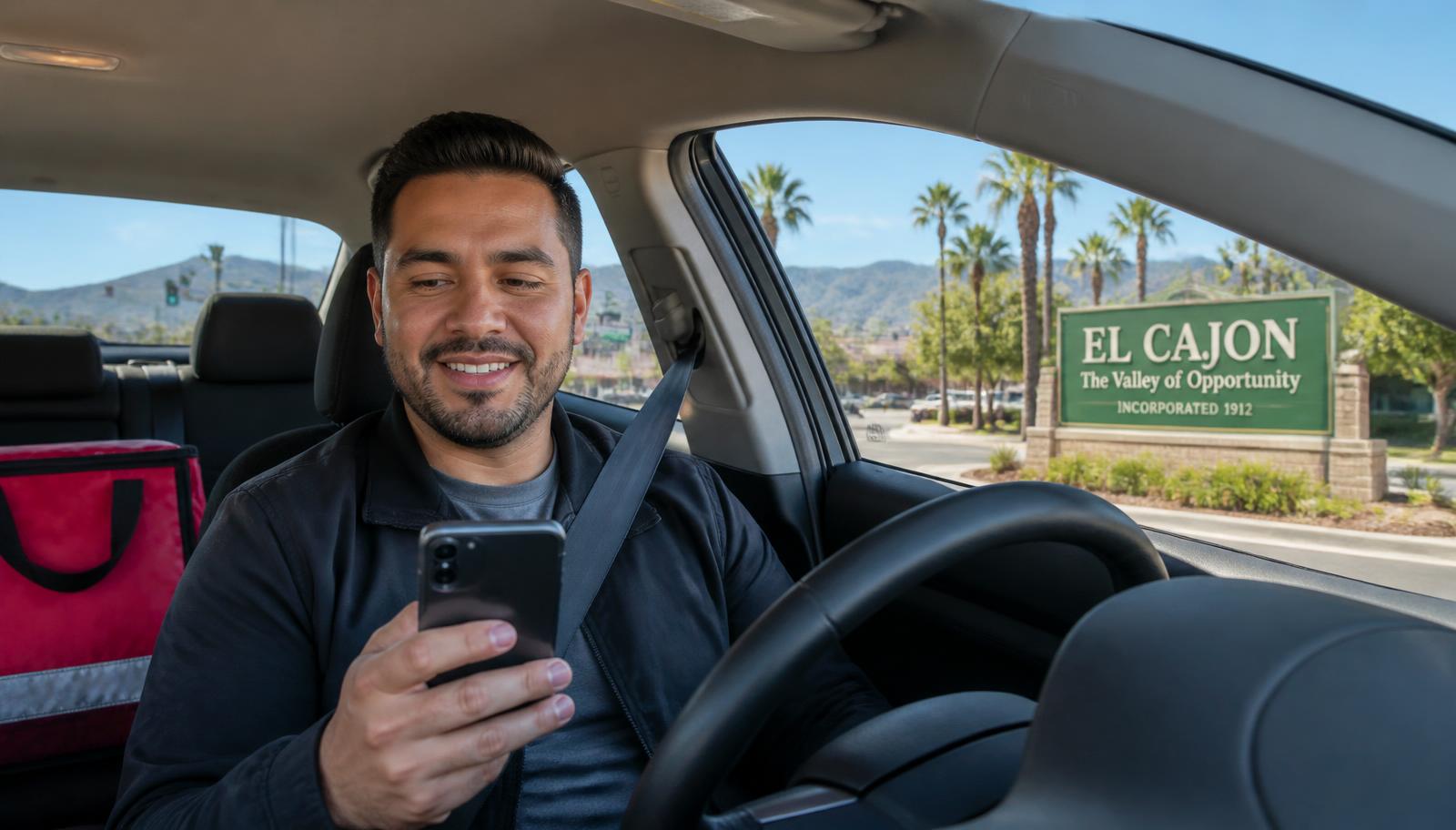
The gig economy has changed the way a lot of El Cajon residents earn a living, or supplement one. Driving for a rideshare platform during evening hours, running food deliveries over a lunch break, or spending weekends dropping off grocery orders has become a normal part of how people make ends meet in East County and across San Diego.
What hasn't caught up is most drivers' understanding of how their car insurance applies, or doesn't, when they're working on a gig platform. The overlap between personal driving and commercial use creates a coverage gap that can leave drivers financially exposed at exactly the wrong moment.
At Vetra Insurance, we work with El Cajon drivers who use their personal vehicles for gig work to make sure that gap doesn't exist. Here's what every rideshare and delivery driver needs to understand.
Your Personal Auto Policy Wasn't Built for This
A standard personal auto insurance policy is designed to cover personal use of your vehicle, commuting to work, running errands, driving to the grocery store, taking a weekend trip. The moment you start using your car to earn money through a rideshare or delivery platform, you've stepped outside what most personal policies are designed to cover.
Many personal auto policies contain explicit exclusions for commercial use of the vehicle. That means if you're involved in an accident while logged into a gig app and your insurer determines you were engaged in commercial activity, they may deny your claim entirely. The accident still happened. The damage is still real. But your policy doesn't respond because you were using the car in a way the policy doesn't cover.
This isn't a theoretical risk. Claim denials based on commercial use exclusions happen regularly, and they often catch drivers completely off guard. Understanding where your personal policy ends and platform-provided coverage begins is the first step toward protecting yourself.
The Three Phases of Rideshare Coverage
Rideshare insurance operates in phases that correspond to what you're doing at any given moment. Each phase carries different coverage levels, and the transitions between them are where gaps tend to hide.
Phase 0: App Off
When your rideshare app is completely turned off, you're driving on personal time. Your standard personal auto policy applies in full, exactly as it would on any other day. No gig-related coverage considerations come into play.
Phase 1: App On, Waiting for a Request
This is the most dangerous phase from an insurance standpoint. You've opened the app and you're available for ride requests, but you haven't accepted one yet. You're driving around El Cajon or sitting in a parking lot, waiting.
During this phase, most personal auto policies consider you to be engaged in commercial activity, the app is on, you're available for hire. Your personal coverage may not apply. At the same time, the rideshare company's insurance provides only limited coverage during Phase 1. Typical Phase 1 coverage from the platform includes liability at lower limits, often around $50,000 per person and $100,000 per accident for bodily injury and $25,000 for property damage. There's generally no collision or comprehensive coverage from the platform during this phase.
If you cause an accident during Phase 1, the platform's liability coverage may handle the other driver's injuries and vehicle damage, but your own car's damage and your own medical bills are likely not covered by either your personal policy or the platform.
Phase 2: En Route to Pick Up a Passenger
Once you've accepted a ride request and are driving to pick up the passenger, the rideshare company's commercial insurance kicks in with significantly higher coverage. Most major platforms provide $1 million in liability coverage during this phase, along with contingent collision and comprehensive coverage, meaning they'll cover your vehicle's damage if you carry collision and comprehensive on your personal policy.
Phase 3: Passenger in the Vehicle
From the moment the passenger gets in until they're dropped off, the platform's full commercial coverage applies. This is the phase with the strongest protection, typically $1 million in liability, uninsured motorist coverage, and contingent collision and comprehensive.
The pattern is clear: protection is weakest during Phase 1 and strongest during Phase 3. The problem is that Phase 1, cruising around waiting for a ride, is where many drivers spend a significant amount of their time on the app.
How Delivery Driving Is Different
If you drive for a food delivery, grocery delivery, or package delivery platform rather than a rideshare service, the coverage structure works differently, and in some cases, the gaps are even wider.
Delivery platforms generally provide some level of liability coverage while you're actively on a delivery, from the moment you accept an order through the moment you complete the drop-off. However, the specifics vary significantly from one platform to another. Some provide liability only. Others include contingent collision coverage. Many have exclusions, deductibles, or conditions that aren't immediately obvious in the platform's driver documentation.
The Phase 1 equivalent, app on, waiting for an order, is often even less clear for delivery drivers than it is for rideshare drivers. Some delivery platforms provide minimal or no coverage during this waiting period. Others don't clearly define when their coverage begins and ends relative to your activity on the app.
If you deliver for multiple platforms simultaneously, accepting the next available order from whichever app pings first, the coverage situation becomes even more complex. Which platform's insurance applies when you're logged into three apps at once and haven't accepted an order from any of them?
The safest assumption for delivery drivers is that platform-provided coverage has limitations you may not fully understand, and your personal policy likely excludes the activity entirely. Bridging that gap with your own coverage is the only reliable solution.
The Rideshare Endorsement: Closing the Gap
The most straightforward way to protect yourself is to add a rideshare endorsement, sometimes called a transportation network company endorsement or a TNC endorsement, to your personal auto policy.
A rideshare endorsement extends your personal coverage to include the periods when you're using your vehicle for gig work. It specifically addresses the Phase 1 gap, ensuring you have collision, comprehensive, and liability protection while the app is on and you're waiting for a request.
The cost of a rideshare endorsement varies by carrier, but it's typically modest, often between 15 and 30 percent more than your standard premium. Given that it eliminates the single biggest coverage gap in gig driving, it's one of the most cost-effective protections available.
Not every carrier offers a rideshare endorsement, which is another reason to work with an independent agent who can shop across multiple companies. If your current insurer doesn't offer the endorsement, switching to one that does, rather than driving without it, is the responsible move.
Full Commercial Auto Insurance: When the Endorsement Isn't Enough
For drivers who work full-time on gig platforms or who use their vehicle for other commercial purposes beyond rideshare and delivery, courier services, mobile business operations, client transportation, a rideshare endorsement may not provide sufficient coverage. In these cases, a full commercial auto policy might be the better fit.
Commercial auto insurance is designed from the ground up for vehicles used in business. It provides higher liability limits, broader coverage for commercial activities, and doesn't rely on the conditional structure of a personal policy with an endorsement layered on top.
Commercial policies cost more than personal policies with endorsements, but for drivers whose vehicles are their primary business tool, the broader protection justifies the investment. Your agent can help you evaluate whether an endorsement or a full commercial policy is the right match based on how many hours you drive, how much you earn, and what platforms you use.
What to Do If You've Been Driving Without Proper Coverage
If you've been driving for a rideshare or delivery platform without a rideshare endorsement or commercial policy, you're not alone. Many drivers either don't know about the coverage gap or assume the platform's insurance has them fully covered.
The good news is that fixing it is straightforward. Contact your insurance agent, let them know you're driving for a gig platform, and ask about adding a rideshare endorsement or adjusting your coverage. There's no penalty for adding it now, and your agent won't report you for having driven without it previously.
What you should avoid is continuing to drive without proper coverage now that you understand the risk. A single accident during Phase 1, with no personal coverage responding and only minimal platform coverage in place, could leave you personally responsible for tens of thousands of dollars in damages and medical expenses. The endorsement costs a fraction of what a single denied claim would.
Taxes, Mileage, and Insurance: Keeping Good Records
As a gig driver, the business use of your vehicle has implications beyond insurance. The miles you drive while working are generally tax-deductible, and your insurance premiums, including the cost of a rideshare endorsement, may be deductible as a business expense.
Keeping accurate records of your driving, which miles are personal and which are for gig work, supports both your tax filings and any future insurance claims. Many drivers use mileage tracking apps that run in the background and automatically categorize trips. This documentation can also be helpful if you ever need to demonstrate to your insurer how much of your driving is personal versus commercial when calculating your premium.
Vetra Insurance Protects El Cajon's Gig Drivers
The gig economy isn't going away, and neither are the insurance questions that come with it. At Vetra Insurance in El Cajon, we help rideshare and delivery drivers understand exactly where their coverage stands, and close any gaps before they become problems.
Whether you drive five hours a week or fifty, we'll find the right combination of personal coverage, endorsements, and platform-provided insurance to make sure you're protected every mile of the way. Contact Vetra Insurance today to get your gig driving coverage sorted out.
Related coverage in El Cajon
Get a Free Auto Quote
Talk to a local Vetra Insurance agent in El Cajon. We compare 15+ A-rated carriers to find the right coverage for your situation.